
Solar Prices in 2026: What Changed, and What It Means for You
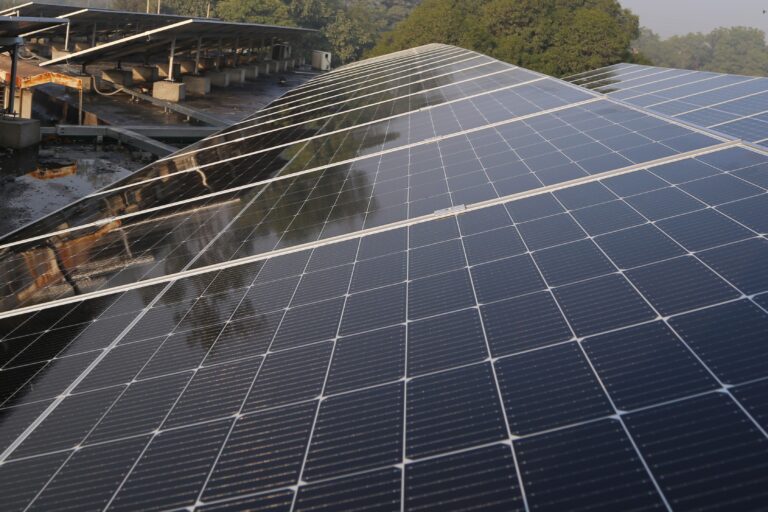
Did you read our earlier post on how GST made solar more affordable? Our earlier post on how GST made solar more affordable? That is still true today. But if you are collecting quotes now, in 2026, you may see a price that seems higher than you expected. This is not a mistake, and before assuming that your installer is overcharging you for something, let’s see what else has changed. A new announcement in June this year is bumping up solar panel prices a little, especially for certain categories of installations.
Two Different Changes
Change 1: GST on solar came down.
In September 2025, last year, the government cut GST on solar panels and other solar equipment from 12% to 5%. For a typical 3 kilowatt (kW) residential solar system, this reduced the upfront cost by about ₹9,000 to ₹10,500. The GST has not changed since, and yet, you may find recent quotes are higher than what you got a few months back.
Change 2: A new rule for solar cells started this year. From June 2026, a new rule affects the price of small parts inside a solar panel, called solar cells. To explain this rule properly, we first need to understand what ALMM is.
What Is ALMM?
. ALMM stands for Approved List of Models and Manufacturers. Maintained by the Ministry of New and Renewable Energy (MNRE), it is a regulatory mechanism that determines which solar module manufacturers and specific models are eligible for use in projects where ALMM applies.
ALMM is not a general product-quality certificate. A solar module may meet applicable technical requirements but still be ineligible for an ALMM-covered project if its manufacturer and exact model are not included in the applicable ALMM list. Until 2026, this list mainly covered the finished solar panel. It did not check what was inside the panel.
The New Rule for Solar Cells
In June 2026, the government added a second list, called ALMM List-II. This list covers solar cells, the small parts inside every panel that actually catch sunlight and turn it into electricity. Before this, a panel could be fully assembled in India, while the cells inside it were imported, often from China. Now, for panels used in most solar projects, the cells inside must also come from this new approved list. ALMM applies to a large share of grid-connected solar projects, including Government and government-assisted projects, projects under government schemes, as well as Open Access and Net-Metering projects.
This change supports Indian cell manufacturing, but it also adds cost. Panels made with these approved Indian cells cost around ₹8 to ₹9 more per watt than panels made with imported cells, according to solar manufacturers. This is the extra cost you may be seeing in some 2026 quotes.
Real Numbers: Which Option Costs Less?
We’ll use a typical 3 kW residential system as an example. These are approximate figures. Your own quote will vary, so always confirm with your installer.
Installation 1: You want the government subsidy under PM Surya Ghar. Your panels must follow both DCR and the new ALMM List-II rule for cells. Before the GST cut, a 3 kW system like this cost about ₹1,80,000. After the GST cut, it costs closer to ₹1,70,000. Once you receive the subsidy of about ₹78,000, your final cost is close to ₹92,000.
Installation 2: You do not want or need the subsidy, so your panels do not have to follow DCR. This does not mean you avoid the new cell rule, though. MNRE confirmed in May 2026 that net-metered and open-access connections, which cover most private rooftop installations, are not exempt either. Buyers going this route are unlikely to avoid the added cell cost, even without claiming a subsidy. Our earlier Non-DCR comparison put a system like this at about ₹1,50,000 before the GST cut and ₹1,40,000 after. Those figures predate the cell rule and likely understate the current cost, since they did not yet account for it. Confirm current Non-DCR pricing directly with your installer.
Installation 1 remains the cheaper option overall for most residential consumers who qualify for PM Surya Ghar, since Installation 2 is unlikely to escape the cell cost and gets no subsidy to offset it. Treat the ₹1,40,000 figure for Installation 2 as an old reference point, not a live quote.
How to Get a Fair Quote
Keep these points in mind when you collect quotes in 2026:
Ask your installer to show the GST rate and the panel cost as separate lines on your quote. This helps you see where your savings and costs are coming from. If you want the subsidy, ask your installer for the exact brand and model name of the panel. Then check this name yourself on the MNRE website, where the ALMM List-I and List-II are public. This way, you are not only trusting the installer’s word.
Compare quotes from at least two or three installers. Prices can differ, since not every installer has moved to ALMM List-II cells at the same speed. If you do not need the subsidy, ask your installer directly whether a Non-DCR panel still avoids the cell-rule cost. This is no longer guaranteed, so get it confirmed rather than assumed.
GST made solar cheaper for everyone last year. The new cell rule adds cost to most panels this year, subsidised or not. For most residential consumers who qualify for the subsidy, that still leaves Installation 1 ahead.