
How GST has made Rooftop Solar more Affordable in India
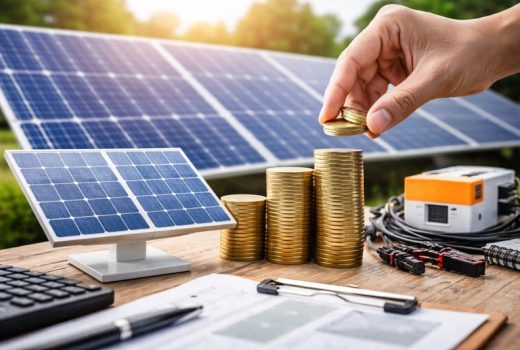
India’s journey to adopting rooftop solar is closely tied to tax and policy decisions, and the latest Goods and Services Tax (GST) reform is a major milestone for the clean energy sector. By reducing GST on the renewable energy value chain from 12% to 5%, the government has lowered project costs and made rooftop solar systems more accessible for households, businesses, and institutions. When combined with schemes like the PM Surya Ghar: Muft Bijli Yojana, the impact on rooftop solar affordability is significant.
GST on Solar Components: What Changed
Historically, solar projects have faced a mix of GST rates: goods, such as panels, could attract one rate, while services like installation and other work attracted rates of 12% to 18%. Recent reforms have rationalised GST on the manufacturing of renewable energy devices and parts, aligning most solar components and solar power–based devices to a lower slab aimed at reducing project costs and compliance complexity. For key rooftop solar elements: panels, inverters, and other major components, sold as part of a solar power generating system or kit, the applicable GST is now 5%. This shift reduces effective capital cost and helps developers, EPCs, and consumers avoid disputes over rate classification (Rate classification simply means deciding which GST slab applies to different parts of a rooftop solar project, such as panels, inverters, mounting structures, and installation services etc). However, some items still attract higher GST if sold separately (for example, standalone inverters or certain accessories), so it remains important to check how each component is billed.
Here’s how the GST change reflects on key rooftop solar components:
| Component | Previous GST | Updated GST |
| Solar PV panel | 12% | 5% |
| Solar inverters | 12% | 5% |
| Solar cables/wires | 18% | 5% |
| Mounting structures | 18% | 5% |
GST is only one side of the affordability story. Importantly, these savings do not affect eligibility for central subsidies. This means that even after the new reduced GST is applied, eligible households can substantially reduce their rooftop solar installation expense by benefiting from the scheme. Since these recent GST reforms are focused on lowering the cost of renewable energy goods rather than changing subsidy eligibility, households remain eligible to claim the scheme benefits while also enjoying the reduced tax burden on solar equipment.
Who gets the benefits?
Several stakeholder groups benefit from rationalised GST on rooftop solar:
- Homeowners and residential societies: Residential users gain from lower component prices plus central subsidies, particularly under the PM Surya Ghar: Muft Bijli Yojana. Lower GST on panels and inverters helps make the rooftop solar system more affordable as upfront costs are reduced. For instance, a 3 kW rooftop system will now be cheaper by about ₹9,000–10,500.
- Businesses and commercial/industrial (C&I) consumers: Lower GST on solar goods improves project viability. This improves the attractiveness of small and large capacity rooftop solar installations.
- EPC companies and MSME installers: Reduced and rationalised GST simplifies billing and lowers the costs of solar panels and equipment
- Farmers: a cost reduction on solar pumps broadens access for farmers.
Why was GST rationalised for renewable energy?
- Lower GST brings rooftop solar into reach for many, supporting India’s Net Zero 2070 targets and India’s Nationally Determined Climate Targets.
- Discoms (power distribution companies) can save yearly through reduced procurement costs; these savings could trickle down to consumers.
Sector analyses highlight that cutting GST on renewable energy devices is meant to promote clean energy deployment and support broader national goals. The new rationalised GST supports domestic manufacturing by effectively reducing module and component costs by 3–4% compared to before, making locally produced components more competitive.
What’s Next?
For consumers and businesses evaluating rooftop solar in the current GST environment, a few checks can ensure transparency and value:
- Confirm that quotations clearly show GST rates for components such as panels, inverters, and mounting structures, and whether they are being billed as part of a composite solar system.
- Ask your installer to explain how GST is being applied to goods versus services (like installation and civil works), especially if an EPC contract structure is used.
- Use a reliable rooftop solar calculator or consultation to cross-check expected energy generation, payback period, and lifetime savings, ensuring all assumptions are in line with your local conditions.
The GST shift has made the economics of solar more favourable; pairing that with the right system design and available subsidies can unlock substantial long-term savings and cleaner power for homes, businesses, and communities across the country.
MN ENERGY
March 17, 2026 at 1:39 pmthe vlog looks lack of true information about GST
it is not 5% when you bill the system to End cnsumer , it is 8.9 % on overall ! you can call me for details o 7091302560 !